
1,000 signatures reached
To: Mayor and Members of the Danville City Council
Urgent Action to Address Systemic Failures Resulting in Eve’s Death in Danville, VA
OUR REQUEST TO DANVILLE CITY COUNCIL
ORGANIZE AND PUBLICLY NOTICE A CITIZEN TOWN HALL DEDICATED TO EVE'S CASE AND DAHS SHELTER PRACTICES
We, the undersigned concerned citizens, animal advocates, and community members, call on the Danville City Council to immediately organize and publicly notice a citizen town hall dedicated to Eve’s case and the practices of the Danville Area Humane Society (DAHS).
We specifically request that this town hall be held during the month of May in recognition of National Pet Month and include meaningful public accountability and transparency from shelter leadership regarding the circumstances surrounding Eve’s death.
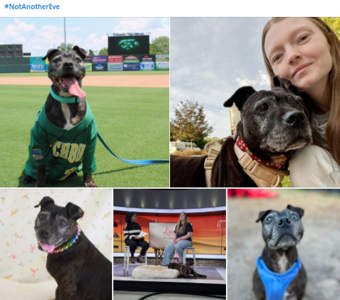
Eve, a 12-year-old dog, was killed at DAHS within just two and a half weeks of intake despite having a documented pathway to safety that standard shelter intake and transfer procedures should have identified. Her death was not the result of a single mistake, but of multiple preventable failures at every stage of the shelter process - failures that reflect a shelter system in urgent need of reform.
We ask that you review the following failures that directly contributed to Eve’s death:
FAILURE #1 - INADEQUATE INTAKE & MICROCHIP PROTOCOL
Eve’s microchip directly linked her to Lynchburg Humane Society (LHS), an organization ready and willing to take her. Standard protocol requires shelters to verify microchip information and contact associated organizations before any disposition decision. That did not occur. Multiple organizations later confirmed they linked Eve’s chip to LHS in under five minutes. That failure cost Eve her life.
FAILURE #2 - INADEQUATE ADOPTION PROMOTION AND PUBLIC VISIBILITY
During her 2.5 weeks at DAHS, Eve was posted for adoption only three times, twice on Facebook and once in a local newspaper. She was never posted on the shelter website or on a public adoption platform such as Petfinder, both standard adoption marketing practices. As a result, adopters, fosters, and rescue organizations had little meaningful opportunity to see or save her.
FAILURE #3 - LACK OF RESCUE AND PARTNER NETWORKING
Despite Eve’s documented connection to LHS, no outreach was made by DAHS to LHS. We’re in contact with every major rescue partner in the area and they were also not contacted. The surrendering owner has publicly stated that she informed DAHS of Eve’s LHS history and provided original records at intake. Prior to this, Amherst County Shelter successfully identified Eve’s LHS connection within minutes and safely returned her. At DAHS, the connection was only recognized after a Homeward Trails Danville staff member noticed and traced the microchip number listed while visiting the facility, though by the time she notified the shelter Eve had already been killed.
FAILURE #4 - FAILURE TO UTILIZE AVAILABLE INTERVENTION TIME
Eve was killed within approximately 2.5 weeks of intake despite having identifiable pathways to safety. Best practices require time for outreach, rescue coordination, and placement efforts. Those opportunities existed but were not meaningfully pursued.
Taken together, these failures reflect a shelter system that did not prioritize lifesaving. Eve’s death was preventable and the foreseeable result of a system that failed to act.
ORGANIZE AND PUBLICLY NOTICE A CITIZEN TOWN HALL DEDICATED TO EVE'S CASE AND DAHS SHELTER PRACTICES
We, the undersigned concerned citizens, animal advocates, and community members, call on the Danville City Council to immediately organize and publicly notice a citizen town hall dedicated to Eve’s case and the practices of the Danville Area Humane Society (DAHS).
We specifically request that this town hall be held during the month of May in recognition of National Pet Month and include meaningful public accountability and transparency from shelter leadership regarding the circumstances surrounding Eve’s death.
Eve, a 12-year-old dog, was killed at DAHS within just two and a half weeks of intake despite having a documented pathway to safety that standard shelter intake and transfer procedures should have identified. Her death was not the result of a single mistake, but of multiple preventable failures at every stage of the shelter process - failures that reflect a shelter system in urgent need of reform.
We ask that you review the following failures that directly contributed to Eve’s death:
FAILURE #1 - INADEQUATE INTAKE & MICROCHIP PROTOCOL
Eve’s microchip directly linked her to Lynchburg Humane Society (LHS), an organization ready and willing to take her. Standard protocol requires shelters to verify microchip information and contact associated organizations before any disposition decision. That did not occur. Multiple organizations later confirmed they linked Eve’s chip to LHS in under five minutes. That failure cost Eve her life.
FAILURE #2 - INADEQUATE ADOPTION PROMOTION AND PUBLIC VISIBILITY
During her 2.5 weeks at DAHS, Eve was posted for adoption only three times, twice on Facebook and once in a local newspaper. She was never posted on the shelter website or on a public adoption platform such as Petfinder, both standard adoption marketing practices. As a result, adopters, fosters, and rescue organizations had little meaningful opportunity to see or save her.
FAILURE #3 - LACK OF RESCUE AND PARTNER NETWORKING
Despite Eve’s documented connection to LHS, no outreach was made by DAHS to LHS. We’re in contact with every major rescue partner in the area and they were also not contacted. The surrendering owner has publicly stated that she informed DAHS of Eve’s LHS history and provided original records at intake. Prior to this, Amherst County Shelter successfully identified Eve’s LHS connection within minutes and safely returned her. At DAHS, the connection was only recognized after a Homeward Trails Danville staff member noticed and traced the microchip number listed while visiting the facility, though by the time she notified the shelter Eve had already been killed.
FAILURE #4 - FAILURE TO UTILIZE AVAILABLE INTERVENTION TIME
Eve was killed within approximately 2.5 weeks of intake despite having identifiable pathways to safety. Best practices require time for outreach, rescue coordination, and placement efforts. Those opportunities existed but were not meaningfully pursued.
Taken together, these failures reflect a shelter system that did not prioritize lifesaving. Eve’s death was preventable and the foreseeable result of a system that failed to act.
Why is this important?
Families who surrender animals in times of hardship do so with the expectation that those animals will be given every possible chance. In Eve’s case, that trust was catastrophically broken.
Her story is not an isolated incident - it is a reflection of systemic failures that demand immediate attention. A public town hall is a critical first step toward restoring transparency, ensuring accountability, and rebuilding a shelter system this community can trust.
We urge you to act - urgently, transparently, and with the seriousness this situation demands.
Please add your name below to stand with Eve and help drive the changes needed to protect vulnerable animals in your community.
For the latest updates, follow the Danville Deserves Better Facebook Page and Lynchburg Humane Society Facebook Page
#NOTANOTHEREVE
Her story is not an isolated incident - it is a reflection of systemic failures that demand immediate attention. A public town hall is a critical first step toward restoring transparency, ensuring accountability, and rebuilding a shelter system this community can trust.
We urge you to act - urgently, transparently, and with the seriousness this situation demands.
Please add your name below to stand with Eve and help drive the changes needed to protect vulnerable animals in your community.
For the latest updates, follow the Danville Deserves Better Facebook Page and Lynchburg Humane Society Facebook Page
#NOTANOTHEREVE